Renting a Travel Trailer Tow Your Home Base Behind Your Vehicle
Travel trailers are the most popular RV type in America. You tow them behind your truck or SUV, unhitch at the campground and drive your vehicle around freely. That flexibility — having a separate car once you're set up — is the travel trailer's biggest advantage over motorhomes.
Quick Specs
What Is a Travel Trailer?
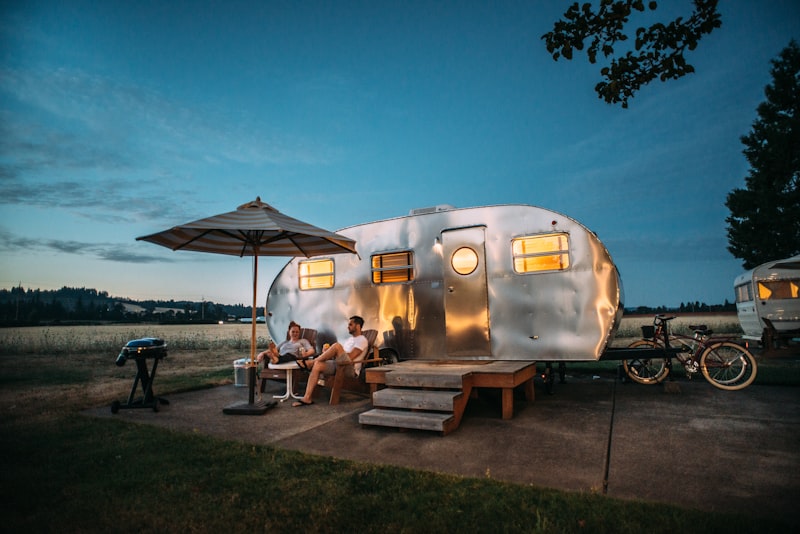
A travel trailer is a non-motorized RV that you tow behind a vehicle using a bumper-pull hitch. They range from compact 15-foot models (sleeps 2-3) to massive 35-foot units with multiple slide-outs (sleeps 8). Unlike a motorhome, there's no engine or driving cab — the trailer is purely living space from front to back.
Inside, a travel trailer has a full kitchen (stove, oven, fridge, microwave), a bathroom with toilet, sink and shower, sleeping areas (master bed, bunks or convertible dinette) and a living area with seating. Models with slide-outs expand the interior by 3-4 feet on each side, creating a surprisingly roomy floor plan when parked.
The key difference from motorhomes: once you park and unhitch the trailer, your tow vehicle is free. Drive to the grocery store, explore a nearby town or hit a trailhead without bringing your entire house. With a motorhome, every errand means packing up camp or leaving your rig unattended.
The key difference from fifth wheels: travel trailers use a standard bumper hitch. Fifth wheels connect to a special hitch mounted in the truck bed — they're heavier, taller and require a heavy-duty truck. Travel trailers work with a wider range of tow vehicles.
Towing Requirements by Size
| Trailer Size | Weight Range | Tow Vehicle Needed | Examples |
|---|---|---|---|
| Small (15-22 ft) | 2,000-4,000 lbs | Mid-size SUV | Toyota 4Runner, Ford Explorer, Jeep Grand Cherokee |
| Mid (23-28 ft) | 4,000-6,500 lbs | Full-size SUV or half-ton truck | Ford F-150, Chevy Silverado 1500, Toyota Tundra |
| Large (29-35 ft) | 6,500-10,000 lbs | Heavy-duty truck | Ford F-250, Ram 2500, Chevy 2500HD |
Always check your tow vehicle's GVWR, maximum tow capacity AND tongue weight rating. The trailer's loaded weight (with water, gear and supplies) is what matters — not the dry weight listed on the spec sheet.

Pros and Cons
Pros
- → Unhitch and use your vehicle freely
- → Full kitchen and bathroom
- → Cheaper to rent than motorhomes
- → Wide size range (15-35 feet)
- → No engine maintenance to worry about
- → Best value per square foot of living space
Cons
- → Need a capable tow vehicle
- → Backing up is hard for first-timers
- → Towing reduces vehicle fuel economy 30-50%
- → Hitching/unhitching takes practice
- → Sway in crosswinds on highway
- → Can't access the trailer while driving
Where to Rent a Travel Trailer
Travel trailers dominate the peer-to-peer rental market. They're the most-listed RV type on both Outdoorsy and RVshare. Many owners offer delivery — they tow the trailer to your campsite, set it up and pick it up when you're done. This eliminates the towing challenge entirely.
| Platform | Pricing | Delivery | Notes |
|---|---|---|---|
| Outdoorsy | $75-$200/night | Many listings offer it | Largest travel trailer inventory |
| RVshare | $75-$175/night | Common option | Good value, strong selection |
Towing and Backing Tips
- → Use a weight distribution hitch. For trailers over 4,000 lbs, a weight distribution hitch spreads the tongue weight across both axles and prevents the rear of your truck from sagging. Most travel trailer rentals should include or recommend one. Ask the owner.
- → Anti-sway bars are essential. Trailer sway (fishtailing) on the highway is dangerous. Sway bars or a sway-control hitch dampens lateral movement. Don't tow a mid-size or large trailer without one.
- → Backing up: hand at the bottom of the wheel. Place your hand at 6 o'clock on the steering wheel. Move your hand in the direction you want the trailer to go. Left hand moves left, trailer goes left. Start with small corrections. Use a spotter. Pull forward and reset whenever you get off track — it's not a failure, it's the method.
- → Request pull-through sites. If backing intimidates you, book pull-through campsites where you drive straight in. No reversing required. Worth the slightly higher campsite fee.
- → Check tire pressure before every drive. Both on the trailer and your tow vehicle. Under-inflated tires cause sway, blowouts and poor handling. The correct pressure is on the tire sidewall, not your tow vehicle's door sticker.
Travel Trailer FAQ
Should I get delivery or tow it myself?
If you've never towed before, delivery is worth the $75-$200 fee. The owner sets up the trailer at your campsite. You don't need a hitch, towing experience or the stress. If you have towing experience and a capable truck, towing gives you flexibility to move between campgrounds.
Travel trailer vs Class C motorhome?
Travel trailer if you want a free vehicle at camp and lower rental cost. Class C motorhome if you don't have a tow vehicle, want to access the living space while driving (passengers can use the bathroom, grab snacks) or don't want to deal with towing at all.
What size travel trailer should I rent?
2 people: 15-20 feet. Family of 4: 22-26 feet with bunks. 5+ people: 27-32 feet. Don't go bigger than you need — every extra foot makes towing, backing and campsite selection harder. Match the trailer weight to your tow vehicle's capacity first, then pick the layout.
Explore other camper types
Class A Motorhomes · Class B Campervans · Class C Motorhomes · Pop-Up Campers · Teardrop Trailers · Truck Campers