Renting a Teardrop Trailer Minimal Footprint, Maximum Adventure
Teardrop trailers are the minimalist's camper. A weatherproof sleeping pod with a rear galley kitchen, light enough for a sedan to tow. They appeal to travelers who want a real mattress and a dry shelter without the bulk, cost and complexity of a larger RV. You sleep inside. You live outside.
Quick Specs
What Is a Teardrop Trailer?
A teardrop trailer gets its name from its shape — a rounded, aerodynamic profile that tapers from front to back like a teardrop. The interior is primarily a sleeping cabin with a queen or full-size mattress. Some models add storage shelves, USB charging ports, a small TV mount, a fan and basic lighting. That's about it for the inside.
The real feature is the rear galley. The back hatch lifts up to reveal a compact outdoor kitchen — typically a 2-burner cooktop, a small sink, storage for cooking gear and sometimes a small fridge. You cook outside with the hatch as your rain shelter. It's a clever design that keeps cooking smells and heat out of your sleeping space.
Weight is where teardrops shine. Most weigh 1,000-2,500 lbs — a fraction of a travel trailer. Some ultra-light models come in under 1,200 lbs, making them towable by compact cars and hybrids. The aerodynamic shape causes minimal drag. Fuel economy with a teardrop in tow drops only 2-5 mpg from your normal driving — versus 8-15 mpg loss with a boxy travel trailer.
The limitation is honest: teardrops are for sleeping and cooking. There's no bathroom, no sitting area, no room to hang out inside when it rains. If you're active travelers who use your camper as a base camp between hikes, bike rides or beach days, a teardrop is perfect. If you want to spend rainy days reading inside, you need more space.
Teardrop vs Other Small Campers
- → Teardrop vs pop-up camper: Pop-ups sleep 4-8 and have interior living space. Teardrops sleep 2 with no interior space beyond the bed. Pop-ups have canvas walls (less weatherproof). Teardrops are fully hard-sided and sealed against weather. Pop-up guide.
- → Teardrop vs campervan: Campervans are self-driving (no towing) with more interior space and sometimes a bathroom. But they cost $100-$250/night to rent. Teardrops are cheaper and you keep your own vehicle for day trips. Campervan guide.
- → Teardrop vs rooftop tent: Rooftop tents mount on your car's roof rack. Similar "bed on wheels" concept but teardrops have a proper mattress, storage, a galley kitchen and weather protection that rooftop tents can't match. Teardrops don't require climbing a ladder in the rain at 2am.
Pros and Cons
Pros
- → Almost any vehicle can tow one
- → Minimal fuel economy impact
- → Hard-sided = weatherproof and secure
- → Fits in any campsite (even tent-only sites)
- → No setup required — park and sleep
- → Cheapest hard-sided camper rental
Cons
- → Sleeps 2 only — no family option
- → Can't stand up inside
- → No bathroom at all
- → No interior living space for bad weather
- → Kitchen is outdoors (exposed to elements)
Where to Rent a Teardrop
Teardrops are exclusively peer-to-peer rentals. Private owners list their personal trailers on Outdoorsy and RVshare. Inventory is smaller than travel trailers or motorhomes — teardrops are a niche category. Book 3-4 weeks ahead in summer to ensure availability in your area.
| Platform | Pricing | Notes |
|---|---|---|
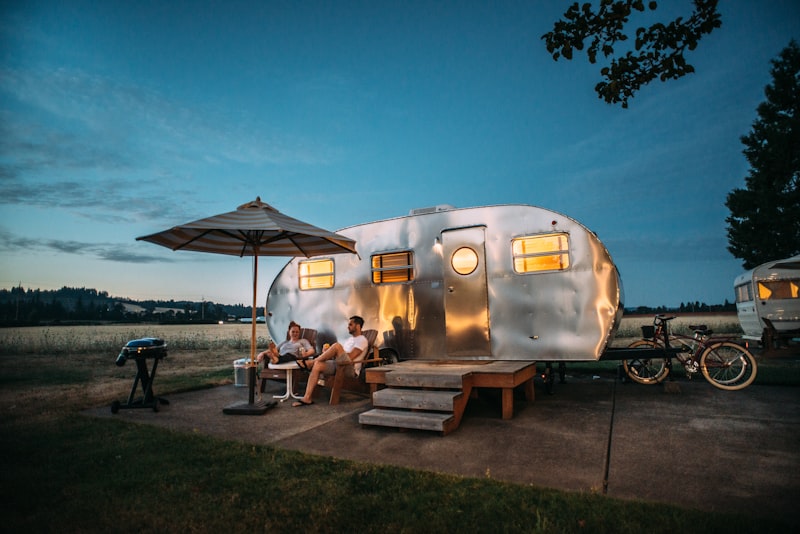
| Outdoorsy | $60-$150/night | Best teardrop selection, includes vintage Airstream teardrops |
| RVshare | $60-$125/night | Growing inventory, delivery available in some areas |
Who Should Rent a Teardrop?
- → Couples who camp actively. If your days are full of hiking, biking, kayaking or exploring — and you just need a dry bed and a way to cook — a teardrop is the right fit. It's a base camp, not a living room.
- → People without a truck. If you drive a Subaru, RAV4 or any mid-size vehicle, a teardrop opens up camping options that larger trailers can't. No need to rent a truck too.
- → Minimalists. If the idea of owning or managing a 30-foot RV makes you anxious, a teardrop's simplicity is the antidote. Hitch, drive, park, sleep. No leveling, no slides, no sewer hookups.
- → Festival and event campers. Teardrops fit in tight festival camping areas. They're secure (lockable) and don't require you to set up a tent in a crowded field. Popular at music festivals and racing events.
Teardrop FAQ
Do teardrops have AC or heat?
Some newer models have a roof-mounted AC unit and a small heater. Most basic teardrops rely on ventilation fans and opening windows. If you're camping in summer heat, verify the teardrop has AC before booking. In cool weather, a good sleeping bag is usually sufficient — the small interior retains body heat well.
Can I take a teardrop off-road?
Some teardrops are built for it — models like the Taxa Cricket and Escapod have off-road tires, higher ground clearance and reinforced frames. Standard teardrops are designed for paved and gravel roads only. If you want to reach remote BLM land or forest service roads, make sure the teardrop is rated for off-road use.
Explore other camper types
Class A Motorhomes · Class B Campervans · Class C Motorhomes · Travel Trailers · Pop-Up Campers · Truck Campers